Blue Board Plaster In Boston Massachusetts
Blue Board Plaster in Boston Masschusetts. Learn how blue board and veneer plaster work, how to spot common issues, and when Boston-area homeowners should seek a professional assessment.
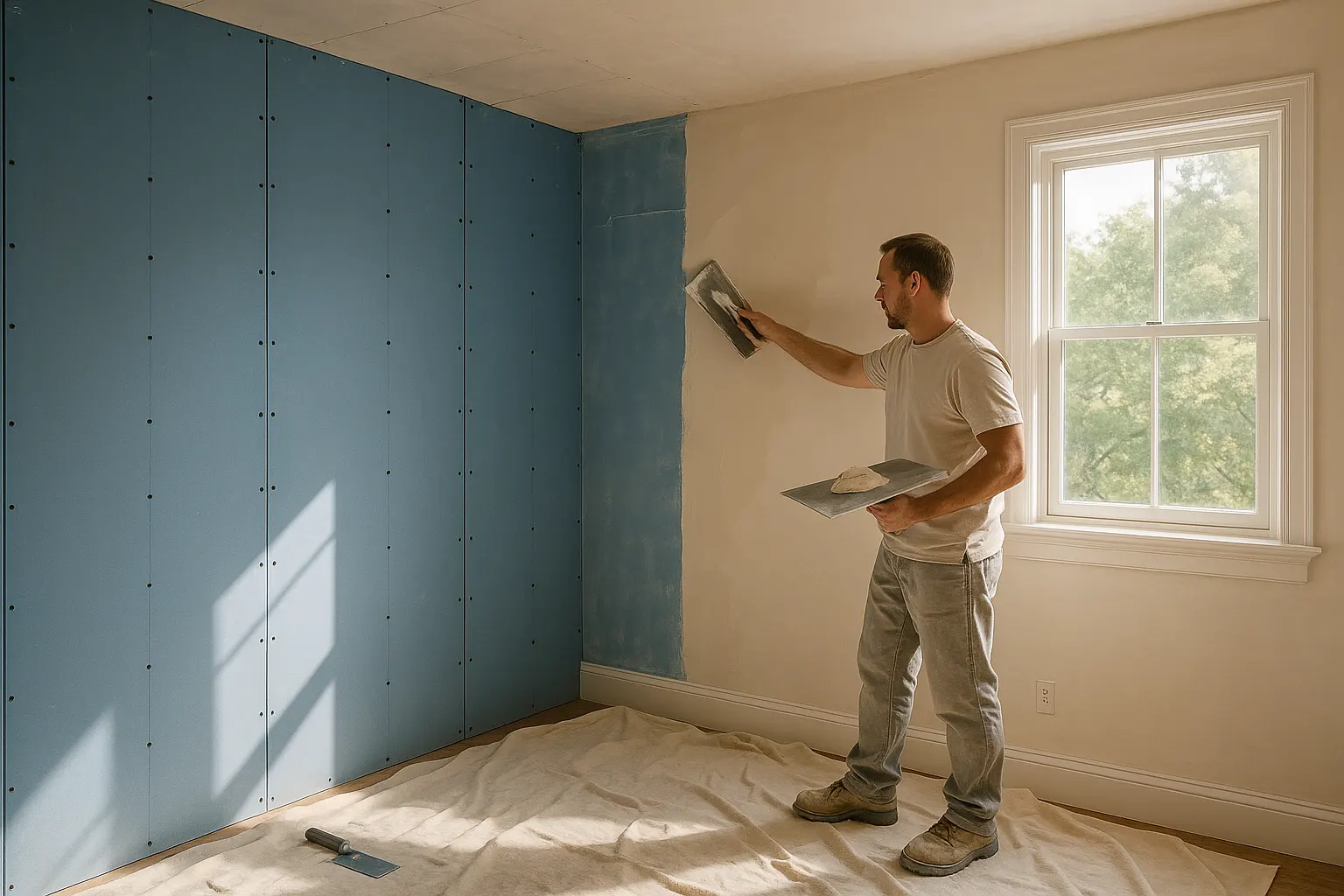 ai image
Blue Board Plaster in Boston Masschusetts. Learn how blue board and veneer plaster work, how to spot common issues, and when Boston-area homeowners should seek a professional assessment.
ai image
Blue board plaster gives walls and ceilings the smooth, substantial character of traditional plaster without the time or thickness of old lath systems. This blue board plaster creates a long lasting quality plaster finish and plaster backing. The highly absorbent design helps form a secure bond for a thin coat of veneer plaster to bond and become a smooth, hard, refined wall and ceiling finish.
Across New England, veneer plaster is very popular for residential remodels, additions, and repairs. blue board is ideal for matching existing plaster, and is paired with a plaster coat rather than standard drywall. A blue board plaster installation or blue board veneer plaster finish, requires the right materials, skill, joint tape, and installation methods. Unlike drywall installation, blue board installation uses wallboard that has a special paper that is made to be more absorbent than drywall, while still having a fire resistant core of gypsum that can enhance insulation and sound blocking properties and resist water damage better than drywall. Ask about plaster finish options, and we will help to choose the right finish system for your home renovation project.
Blue board plaster combines a gypsum plaster base with a thin veneer-plaster finish for the hard, seamless look of traditional plaster without a full three-coat system. Unlike standard drywall, blueboard requires compatible plaster materials, specialized joint treatment, and skilled trowel work. It suits Boston-area renovations, repairs, and additions, but successful results depend on sound framing, moisture control, proper conditions, and matching the entire installation system.
ai image
In Greater Boston and across New England, blue board plaster is a popular choice for homeowners who want the durable, substantial character of traditional plaster without rebuilding every wall in a full three-coat system. Blue board, also called blueboard or plaster board, is a gypsum plaster base made specifically for veneer plaster, not ordinary drywall compound. Its highly absorbent design helps the plaster coat grip securely, creating wallboard that is more absorbent than drywall. Standard gypsum board should not be used as a base for gypsum plaster. [3]
Blue board is paired with compatible veneer plaster products and finished with a thin coat troweled across the surface. Depending on the system, the work may include a basecoat and finish coat of plaster or a one-coat application over the blue board lath. One-coat veneer systems are generally applied at roughly 1/16 to 3/32 inch. Basecoat systems use a veneer basecoat at approximately 1/16 inch before the finish. [4] The result is a denser, more refined surface than taped drywall, well suited to restored period rooms, walls, and ceilings, as well as carefully detailed new work.
At MrWalls Plaster & Painting, we approach blue board as a complete system, not a finish coat product. Manufacturers vary their plaster base and finish plaster, so the selected board, plaster, trims, fasteners, materials, and supplies work together. [1] Blue board installation follows drywall installation in rules, but joint treatment and fastener treatment require a different approach. Precise board installation and careful blueboard installation are important before plastering begins. Proper temperature, good ventilation, and dry conditions also matter: gypsum veneer plaster should be applied between 55°F and 80°F, with those conditions maintained while it sets and dries. [3]
Blue board is ideal for high end renovations where uneven walls need a uniform surface, and for walls with direct sunlight and satin or semigloss paint designed to sit comfortably beside original plaster. Its fire resistant core can help enhance sound insulation when paired with the right sound blocking finish plaster into a wall assembly, though it is not intended as a water barrier. Although plaster veneer are very popular for their smooth appearance and durability, lasting quality depends on careful preparation, proper installation, and skilled trowel work, not simply the product or products chosen.
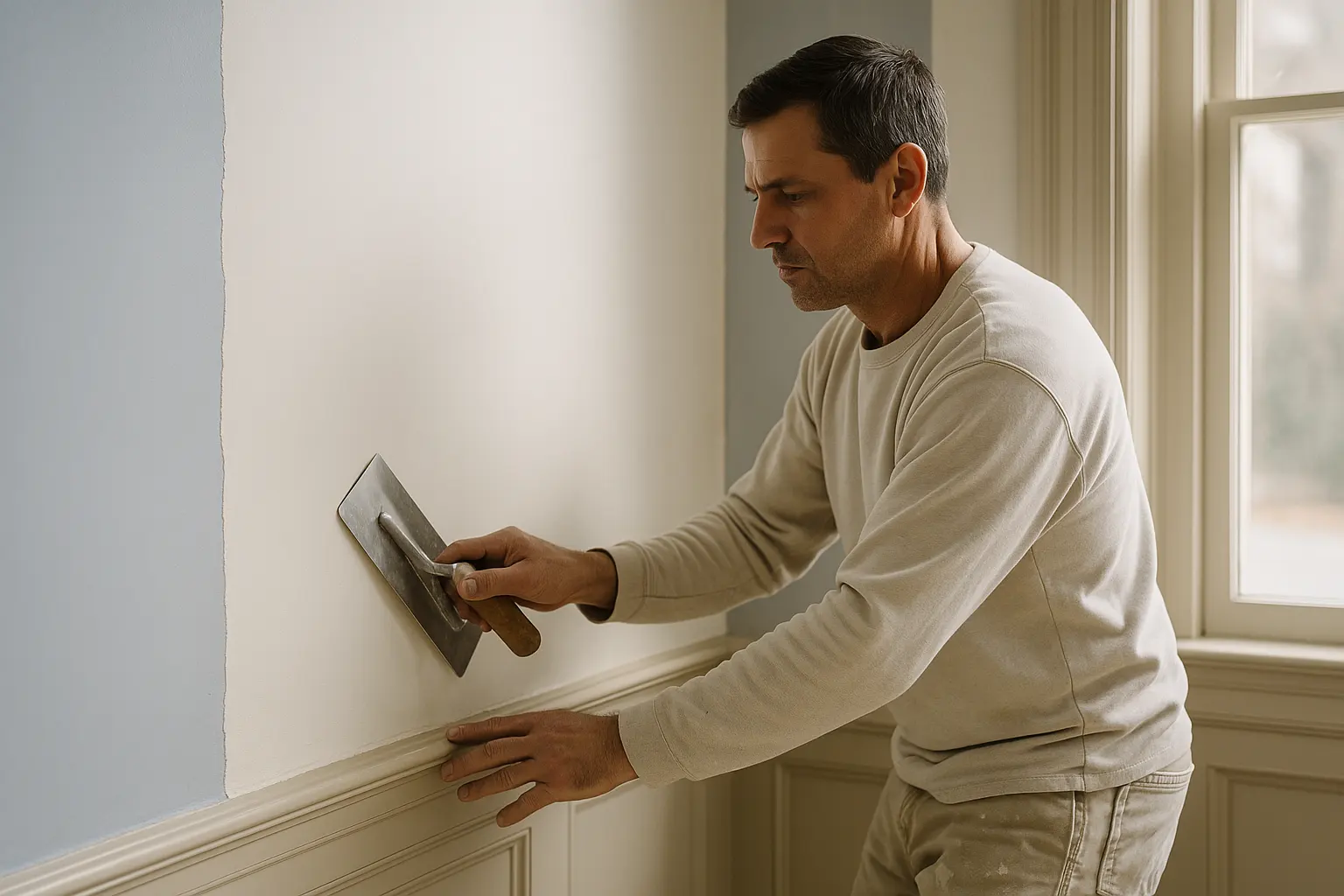 ai image
For Boston-area homes, choosing between drywall and blueboard is less about installation speed and more about the finish you want to live with. Drywall installation uses taped seams, joint compound, sanding, primer, and paint. Blue board installation uses a gypsum plaster base made for veneer plaster: a thin coat of durable, trowel-applied plaster rather than conventional drywall compound. [1]
Both systems start with good framing, planned panel layout, proper screw length and pattern, and tape over the seams. The hanging installation for walls and ceilings should be tight, regardless of the final finish. Uneven framing, proud screw heads, and unsupported edges will not disappear beneath plaster or paint, it will reappear as cracks down the road. Standard gypsum-panel hanging guidance covers panel layout, screw length and thread type selection, spacing, and installation over properly spaced wood or steel framing. [5]
The tape coat is similar and usually a mesh tape is applied everywhere two pieces of blue board meet. The main difference is in the finish after tape. With drywall, installers feathering multiple coats over the tape to hide it and apply several coats of compound before sanding the surface smooth. With blue board installation, the board serves as plaster lath backing for the layer of veneer plaster to cover. Seams and butt joints often get a prefill coat before the whole board is covered with a thin trowel applied layer of diamond or imperial plaster. Blue board is paired with veneer plaster products made for its highly absorbent design; standard gypsum board is not recommended as a gypsum-plaster base, and could lead to plaster delaminating off the wall. [1] [3]
As a plastering contractor in Boston Massachusetts, we often recommend blueboard to homeowners seeking the crisp, monolithic character of traditional plaster in new england homes. Blue board is ideal for renovated rooms where original plaster remains elsewhere in the house. This wallboard that is more absorbent than drywall is not simply a product with different face paper. It is part of a complete plaster board system that requires the right supplies, plaster products, and blue board plaster expertise. While plaster veneer are very popular for their refined appearance, drywall remains an excellent practical choice when a painted Level 4 or Level 5 finish is the goal. Neither option will meaningfully enhance insulation on its own; that performance comes from the wall or ceiling assembly behind it. Water exposure, a fire resistant core, schedule, and crew skill should guide the final installation.
| Consideration | Drywall Installation | Blueboard Installation |
|---|---|---|
| Joint treatment | Joints are taped and built out with multiple coats of joint compound, then sanded flat. | Seams and corners use materials and techniques specific to plaster, followed by a continuous troweled finish. |
| Finish system | Designed around taped seams, joint compound, sanding, primer, and paint. | Uses a gypsum plaster base specifically made to receive a thin, hard veneer-plaster finish. |
| Intended appearance | Well suited to projects where a painted Level 5 finish is the goal. | Provides the crisp, monolithic character associated with traditional plaster. |
| Appropriate use context | An excellent practical choice for many projects. | Often recommended where homeowners want a traditional plaster appearance, in renovated rooms with original plaster elsewhere in the home. |
| Base-material requirements | Uses conventional drywall compound and paint as part of the finish process. | The blueboard base and veneer plaster need to be matched; standard gypsum board is not recommended as a gypsum-plaster base. |
| Installation fundamentals | Requires sound framing, careful panel layout, proper fasteners, supported edges, and attention to seams. | Requires sound framing, careful panel layout, proper fasteners, supported edges, and attention to seams. |
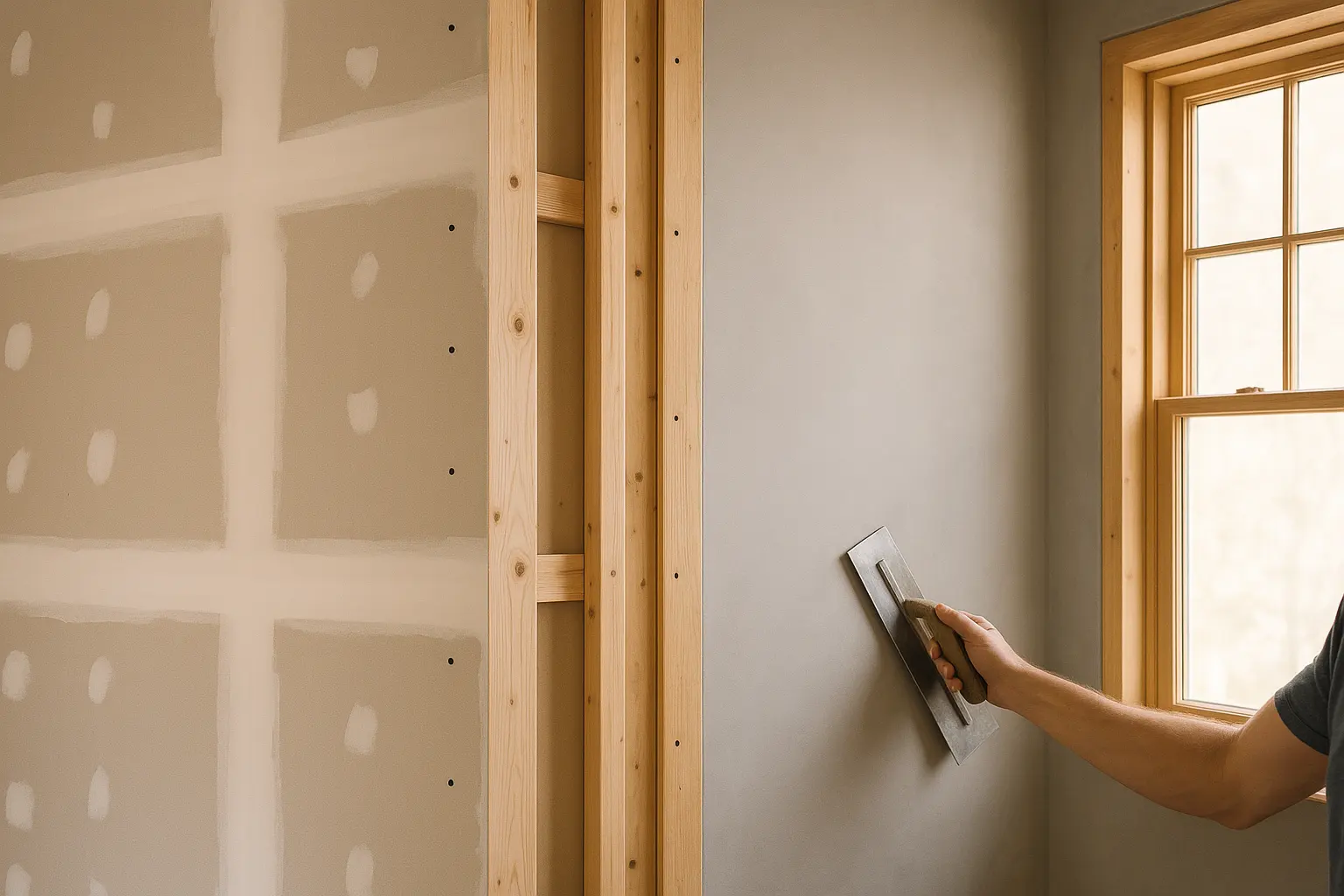 ai image
In Boston homes, “blue board plaster” usually refers to a veneer-plaster system installed over blue board gypsum base, not a wall painted blue. That distinction matters when evaluating damage. A hairline crack in an otherwise sound veneer finish may need careful repair and blending. Widespread failure, loose material, or water-damaged walls may call for replacement instead.
At MrWalls Drywall & Painting, we first identify exactly what is on the wall. Blue board is a gypsum plaster base designed to receive veneer plaster, with different joint treatment and finishing materials than standard drywall. [1] In many New England homes, blue board is ideal to receive a durable thin coat of plaster because blue board is paired with compatible plaster products. This wallboard that is more absorbent than drywall has a highly absorbent paper design. Certain plaster board products also include a fire resistant core and may help enhance insulation. Ordinary gypsum board is not suitable plaster backing for one coat gypsum plaster. The wrong board, tape, compound, primer, product, or other supplies may look acceptable at first but fail prematurely. [3]
Water deserves especially close attention. Before restoring plaster, we locate and make sure you have corrected the source, whether it is a roof leak, plumbing issue, condensation, or exterior opening. Then we allow the assembly to cavity thoroughly. New materials installed over unresolved water damage only conceal the problem for a time. We also verify that surrounding plaster remains firmly bonded and that framing, board edges, and ceilings have not shifted.
For selective repairs, the goal is to preserve as much original finish as practical while creating a stable, nearly invisible transition. The job may include removing compromised plaster, adding compatible blue board where needed, reinforcing joints, and applying a veneer basecoat followed by a finish plaster coat. Blue board installation and blueboard installation require the right product, materials, and board installation methods. In New England, plaster veneers are very popular because they provide a refined finish when installed correctly. [4]
For larger renovations, drywall installation and plaster installation decisions should be made as a complete system, not board by board. Manufacturer-matched plaster base and veneer plaster, well planned panel layout, and correct fastener type and length all shape the finished walls. [1] Temperature and ventilation matter, too. Gypsum veneer plaster should be applied within specified conditions, with steady heat and airflow as it sets and dries. [3] The result is more than a smooth blueboard surface: it is a durable plaster finish ready for the proper primer and paint.
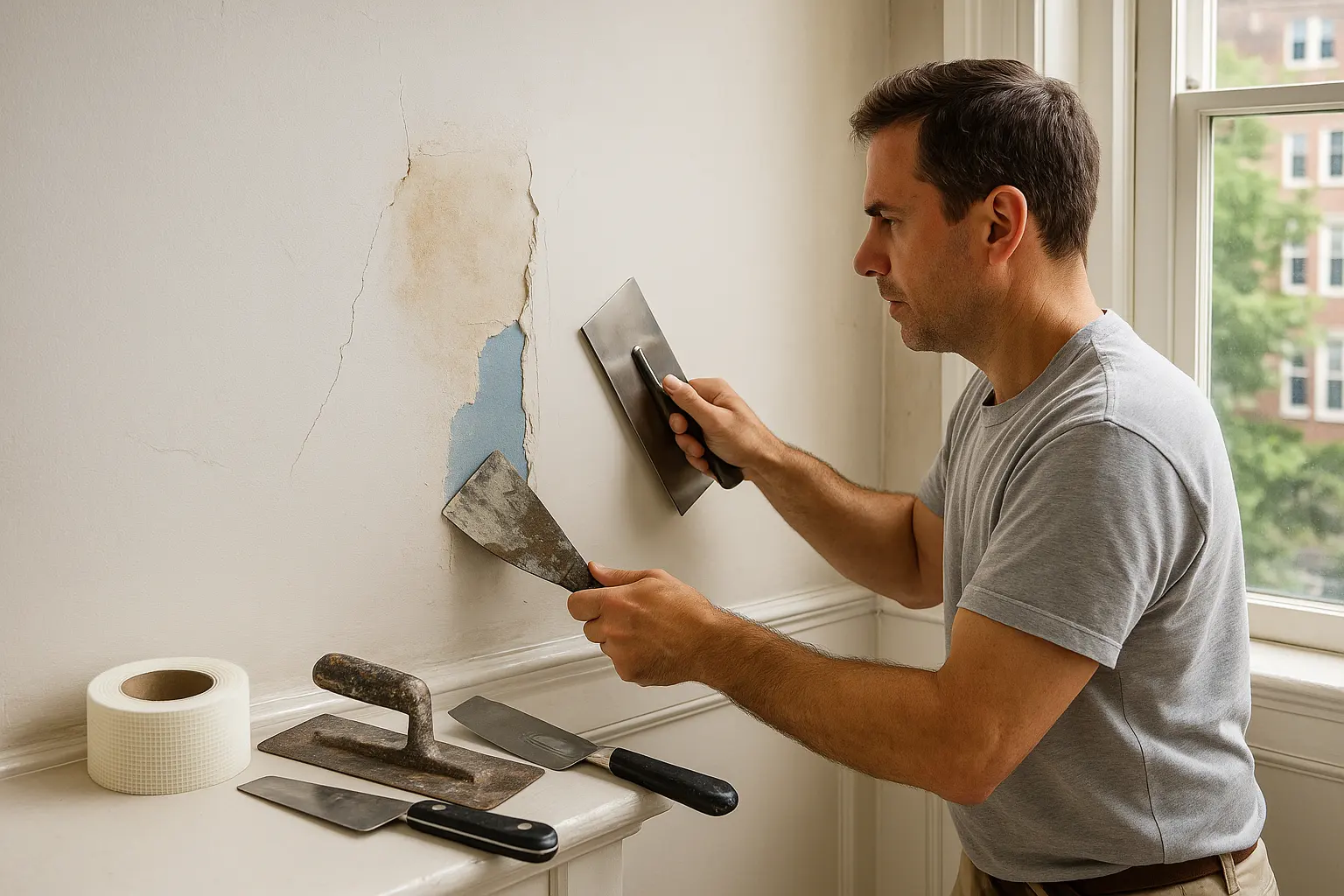 ai image
Blue board plaster is a veneer-plaster system. Blueboard is a gypsum panel designed to receive a thin troweled plaster coat, producing a hard, smooth, monolithic finish that resembles traditional plaster more closely than standard taped drywall.
No. Standard drywall is not intended as a base for gypsum veneer plaster. Blueboard, compatible plaster products, joint materials, trims, and fasteners should be selected as a matched system for reliable adhesion and a durable finish.
Small cracks on firmly bonded, dry plaster can often be repaired. Replacement may be preferable when plaster is loose, water damaged, extensively cracking, or poorly supported. Any leak, plumbing issue, or condensation source should be corrected before repair work begins.