Plaster Ceiling Repair In Boston Massachusetts
Plaster Ceiling Repair in Boston Massachusetts. Learn how to assess plaster ceiling cracks and damage, understand repair options, and know when a professional on-site assessment is warranted.
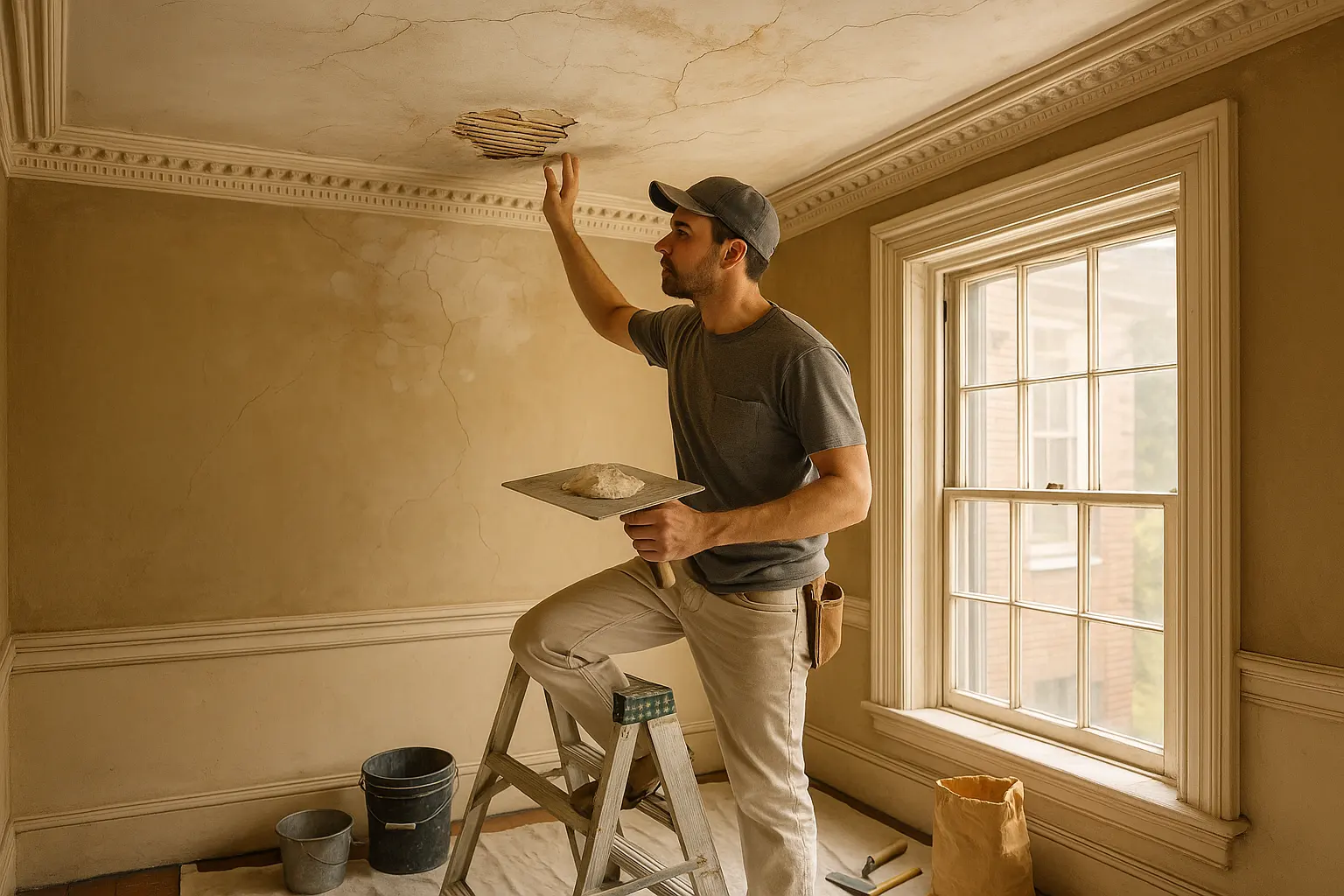 ai image
Plaster Ceiling Repair in Boston Massachusetts. Learn how to assess plaster ceiling cracks and damage, understand repair options, and know when a professional on-site assessment is warranted.
ai image
Plaster ceiling repair starts with understanding what you see. A small surface crack may need a simple plaster patch and a thin coat. But sagging ceilings, recurring cracks, cracked plaster, or loose plaster can point to deeper ceiling damage in the lath, wood lath, or the layer behind the ceiling plaster. Whether you need to fix a joint, repair a lath ceiling, or address moisture above a bathroom, this guide explains when ceiling repair makes sense and when it is time to call a plaster contractor. It also covers plaster ceilings, drywall, adhesive, and repairing cracked plaster without letting damage spread across the area, wall, or ceiling.
Plaster ceiling repair begins with identifying the cause of cracks, sagging, stains, or loose areas, not simply covering damage. In older Boston homes, failed lath keys, moisture, settling, and past repairs can require stabilization or restoration before finishing. Prompt professional assessment helps prevent safety issues, preserve original plaster, and ensure a seamless, durable repair matched to the ceiling’s existing texture and finish.
A successful plaster ceiling repair starts with an accurate diagnosis, not a quick layer of compound over a visible crack. In Boston’s older homes, plaster ceilings often show age through fine cracks, sagging areas, stains, or separation along the wall line. Each sign can have a different cause, so the right ceiling repair begins by addressing the source before restoring the surface. A single straight crack may result from normal seasonal movement. A network of cracks can indicate weakened keys behind the plaster. A soft or bowed ceiling needs prompt attention, especially after a roof leak, plumbing issue, or moisture from a bathroom above.
We also inspect the area around the damage. Water stains, peeling paint, or a damp wall may reveal an active moisture issue rather than an isolated cosmetic problem. In a bathroom, poor ventilation can slowly weaken ceiling plaster without an obvious leak. When original lath-and-plaster construction begins to detach, simply filling cracks will not create a lasting repair. Loose plaster must be stabilized, secured, or carefully removed before new plaster is applied.
At MrWalls Plaster & Painting, we assess the full ceiling surface, the edges where it meets adjacent walls, and the history of the space before recommending a repair. This helps distinguish ordinary settlement from ceiling damage that calls for more involved restoration. It also allows us to match the repair method to the home, whether the goal is preserving an original smooth finish or preparing a damaged area for painting. Once the underlying issue is clear, the fix can be clean, durable, and visually seamless, not a temporary cover-up.
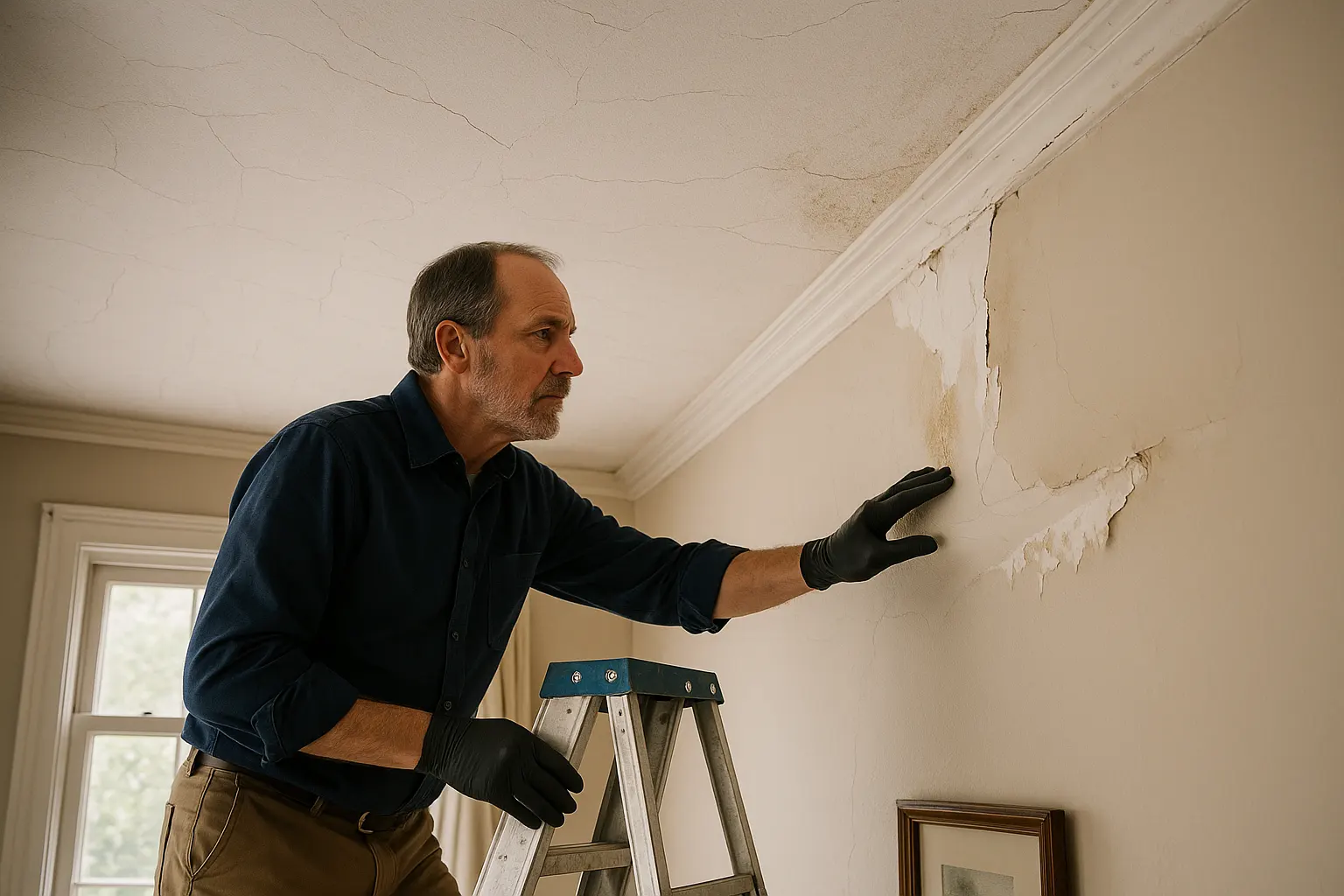 ai image
Ceiling damage rarely begins with a dramatic collapse. More often, homeowners notice a fine crack near a light fixture, hairline cracks across a room, or an area that sits lower than the surrounding surface. In Boston’s older homes, these signs warrant prompt attention. Many properties have traditional plaster ceilings built over a lath ceiling system. Plaster was pressed through wood lath to create keys behind it. Over time, those keys can weaken due to moisture, vibration, structural movement, or earlier repairs that did not address the underlying issue.
Cracked plaster is not always an emergency, but the pattern matters. One narrow crack may reflect seasonal movement. Intersecting cracks, widening seams, staining, or a sagging field of ceiling plaster may mean the plaster is separating from its lath. Gently tap around the affected area. A hollow sound, a flexing surface, or falling grit can signal loose plaster overhead. Avoid poking, scraping, or drilling into a suspect ceiling, especially if it is visibly bowed. This is especially important in a bathroom, where moisture can spread behind a wall or ceiling surface.
At MrWalls Plaster & Painting, our plaster contractor team evaluates the full assembly, not just the visible crack. We check for failed plaster keys, compromised wood lath, water intrusion, and movement at each wall and ceiling joint. That assessment guides the right ceiling repair, from a targeted plaster patch and adhesive stabilization to careful removal of a damaged layer. A drywall fix may suit some settings, but historic plaster ceiling repair requires a different approach. Whether repairing cracked plaster calls for a fresh coat, a larger repair, or a bag of loose material removed for safety, early action saves time and helps preserve original plaster ceilings.
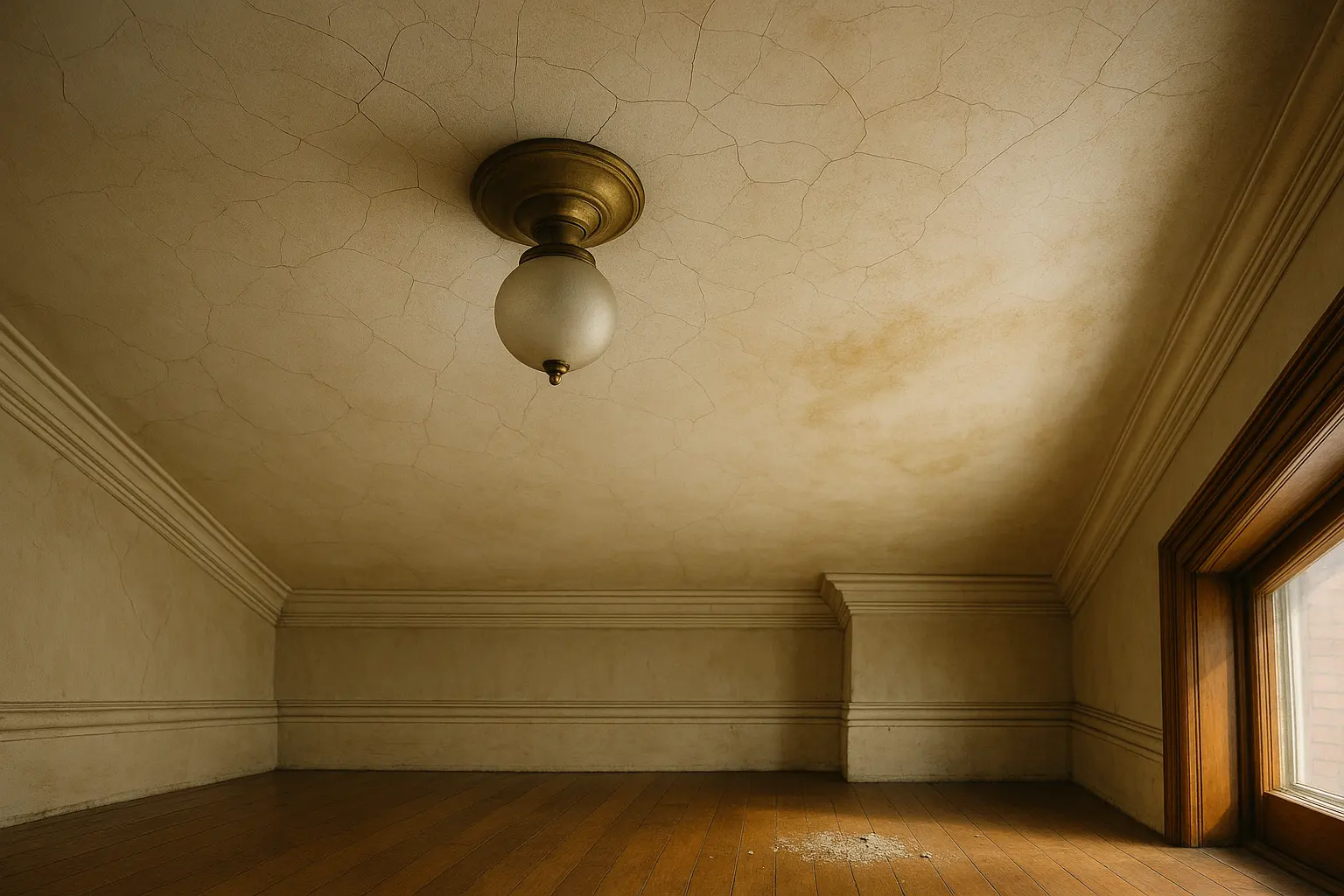 ai image
| Warning sign | What it may indicate | Recommended next step |
|---|---|---|
| Single narrow crack | Normal seasonal movement | Monitor the crack and note whether it changes over time. |
| Intersecting cracks or widening seams | Possible weakening plaster keys or plaster separating from the lath | Arrange a professional assessment of the ceiling assembly. |
| Staining on the ceiling | Possible water intrusion affecting the plaster or supporting materials | Have the source and affected ceiling area assessed promptly. |
| Sagging or bowed ceiling plaster | Plaster may be separating from its lath and becoming unstable | Avoid poking, scraping, or drilling into the area; seek professional evaluation. |
| Hollow sound, flexing surface, or falling grit when gently tapped | Loose plaster overhead | Do not disturb the surface further and have the area professionally assessed. |
Repairing cracked plaster ceilings begins with a careful diagnosis, not just a bag of compound. In Boston’s older homes, a visible crack may be minor ceiling damage at a joint. It can also signal that loose plaster has pulled away from the wood lath behind it. A skilled plaster contractor needs to identify the difference before recommending a ceiling repair. At MrWalls Plaster & Painting, we inspect the surrounding ceiling for movement, hollow spots, staining, sagging, and cracks that extend toward a wall or bathroom.
For a stable crack, the goal is a strong, flexible joint, not simply a covered line. We open and clean the crack, remove weak material, and reinforce the area where needed. Then we build the plaster patch in thin, controlled applications. Each layer has time to set before the next coat is applied. This method helps limit shrinkage, ridging, and new cracks that can follow a heavy, one-pass repair.
When ceiling plaster has separated from its lath, the repair calls for added care. We stabilize the loose field with a compatible adhesive system, securing the plaster without unnecessary demolition. A lath ceiling with missing or failed sections may need new backing. Depending on the condition, that can involve traditional lath work or a properly integrated drywall substrate. The finished surface is feathered across a broad area, helping the repair blend into the full ceiling plane rather than stopping at the immediate crack.
A lasting plaster ceiling repair also addresses the cause. Seasonal movement, old water intrusion, structural settling, and failing fasteners can all influence the right fix. Once the substrate is stable, we match the existing texture and paint finish. We spread each finish layer with care to restore a seamless surface and preserve the character of original plaster ceilings.
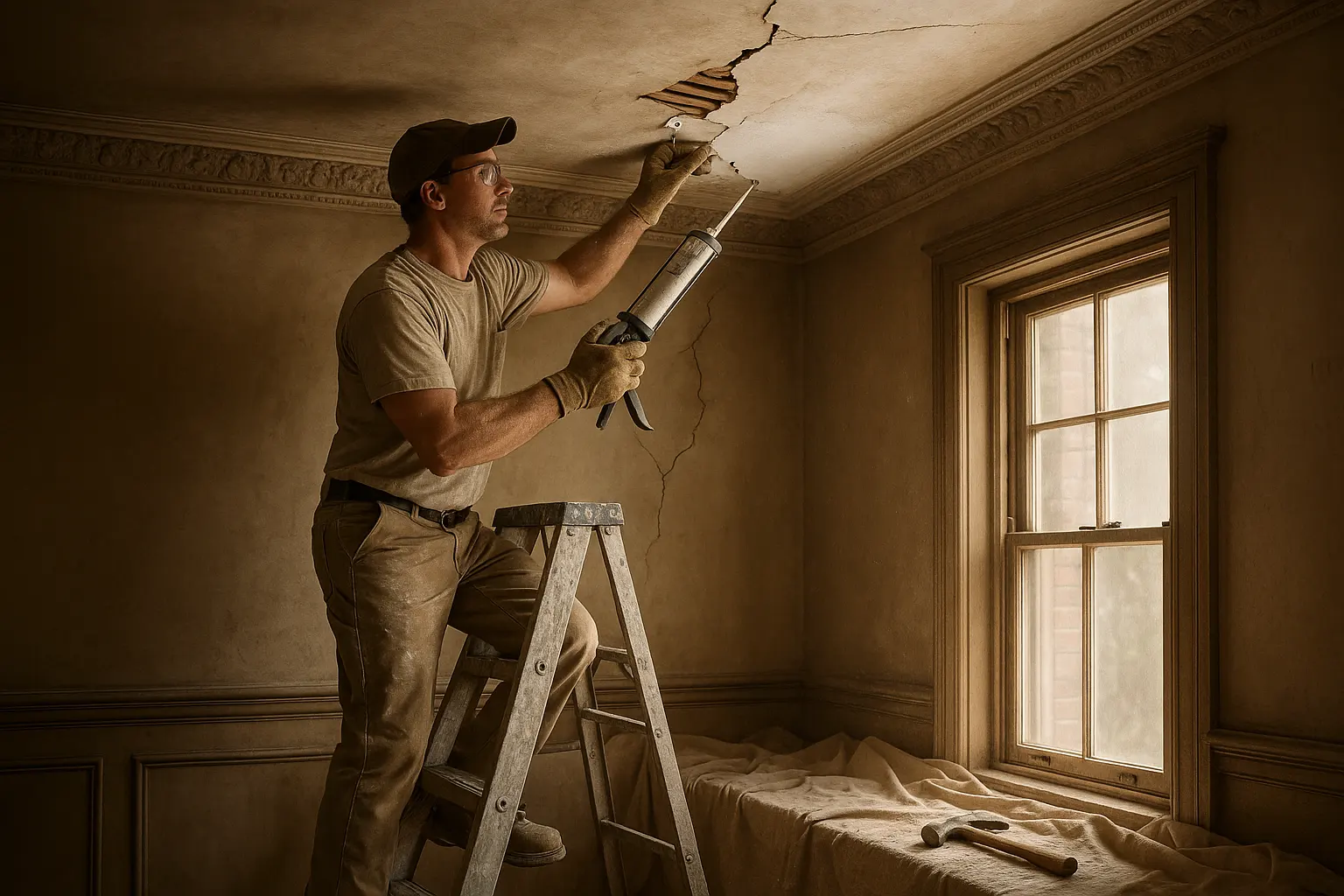 ai image
Choosing a plaster contractor involves more than comparing estimates. First, understand what your wall or ceiling needs. At MrWalls Plaster & Painting, we look for the cause of the damage, including settling, moisture, failed keys behind historic plaster, prior patchwork, or movement around doors and windows. A small crack on the surface can signal loose plaster behind it, particularly in an older lath ceiling or a wall with original wood lath.
Repair time depends on the scope of work, access, and the finish required. A small crack, plaster patch, or drywall joint repair may be completed in one visit. Larger ceiling damage, cracked plaster, or a bathroom area affected by water may require multiple stages, with drying time between each coat. Repairing cracked plaster takes more than opening a bag of patching material, applying adhesive, and smoothing it over the surface. Careful preparation, reinforcement, compatible materials, and detailed finish work help the repair blend with the existing wall or ceiling plaster.
Cost depends on the size and location of the area, ceiling height, plaster thickness, substrate condition, containment needs, and the level of paint-ready finishing requested. Ceiling repair and plaster ceiling repair may also vary based on access, the number of damaged layers, and whether the plaster must be reattached to the lath. Address water damage at its source before work begins. Otherwise, even an expert fix may fail prematurely. Older Boston homes can also have curved plaster ceilings, ornamental transitions, layered finishes, or details that need extra care.
Before hiring, ask whether the contractor will look beyond visible cracks, explain the proposed repair method, and provide a clear scope for protection, priming, painting, and cleanup. Ask how they will stabilize loose plaster, repair a damaged joint, or spread a finish layer for a seamless result. Photos can help start the conversation, but an on-site review is usually the best way to create an accurate plan. Our team serves Boston and the greater Boston area with durable repairs that preserve the character of existing plaster ceilings and walls.
ai image
A narrow, isolated hairline crack may result from normal seasonal movement. Widening or intersecting cracks, water stains, a hollow sound when lightly tapped, falling grit, or a sagging area can indicate loose plaster or failed keys behind the lath. A bowed or soft ceiling should be assessed promptly.
Yes. Many plaster ceiling repairs can be localized when the surrounding material is sound. Stable cracks can be reinforced and patched, while detached plaster may be stabilized and secured to the lath. Larger failed sections may need selective removal and replacement before the finish is restored.
No. The roof leak, plumbing issue, or ventilation problem should be resolved first. Repairing plaster over an active moisture source can lead to renewed staining, softening, paint failure, and premature damage to the new finish.
Traditional plaster ceilings rely on plaster keys formed behind wood lath. Age, vibration, moisture, structural movement, and earlier repairs can weaken those keys, allowing the plaster to loosen or sag. A professional assessment helps determine whether stabilization or section replacement is needed.
Timing depends on the damage, access, and finish level. A small stable crack may be addressed in one visit, while loose plaster, water damage, or multi-coat restoration requires additional time for preparation, setting, drying, and paint-ready finishing.
Cost depends on the damaged area’s size, ceiling height, plaster thickness, substrate condition, containment requirements, access, and desired finish. Historic details, curved surfaces, original lath, water damage, and the need for priming or painting can also affect the scope.